Everett’s Story
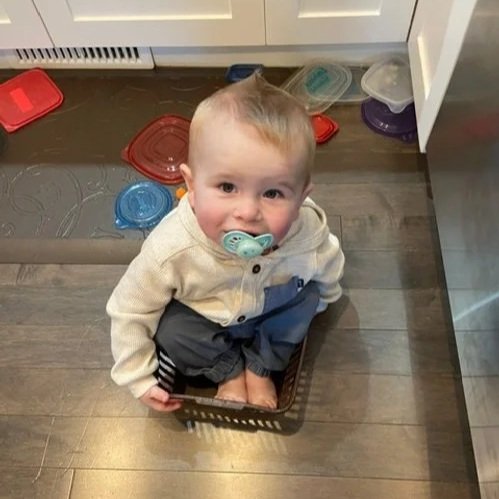
Everett
16 months old and thriving.
This blog post is written by Everett’s mom, Kelcey.
”I went to my 20 week anatomy scan thinking I had a healthy baby. I was excited to find out if my 16 month old daughter would be having a baby brother or sister. When the sonographer told me that they couldn’t visualize the heart well and to come back tomorrow, I didn’t think anything of it. “The same thing happened with my daughter, I guess my babies just don’t like having their pictures taken!” I joked. The next day, the next sonographer took a long time looking at my son’s (yay a baby boy!) heart. That’s when I knew something was wrong.
My OB called later that day and told me something was wrong with my son’s heart, but they weren’t sure what it was. We were referred for a fetal echocardiogram at the Royal Alexandria Hospital. When the echo was done, they led us down the hallway to a little room with sofas and Kleenex. “This means something is very wrong,” I said to my husband. I’ll never forget that moment or the discussion that came afterwards. It changed the course of our lives. They explained to us our son’s diagnosis. He had
d-transposition of the great arteries, meaning his aorta and pulmonary artery were attached to the wrong sides of the heart. He had a large ventricular septal defect - a hole between the two sides of his heart. He also had pulmonary stenosis - his pulmonary valve was narrow and thickened. He would need open heart surgery to fix all of these issues. Because of his pulmonary stenosis, he likely wouldn’t be a candidate for the typical surgery for d-TGA (the arterial switch operation), and would need a different procedure called the Nikaidoh at 4-6 months of age, and would require follow up surgeries for the rest of his life.
I remember feeling absolutely devastated. I couldn’t even begin to wrap my head around my baby having to go through this. My husband and I took the rest of the day off work and we sat on the couch crying together until it was time to get our daughter from daycare. How were we going to explain this to her? We felt so lost.
What followed was regular ultrasounds at the maternal fetal medicine clinic, fetal echocardiograms, appointments with a high risk OB, and preparing for induction at the Royal Alexandria Hospital at 39 weeks. My son would need to be immediately transferred to the Stollery Children’s Hospital after birth. By the time I went for my induction we were emotionally numb, but as prepared as we could be. My son’s birth was complicated by shoulder distocia. He was taken from me immediately. I’m not sure what went on in the few minutes he was away from me, all I know is it was, up until then, the most terrifying time in my life. After they got him sorted out, I was able to hold him for about 5 minutes before he was transported to the Stollery.
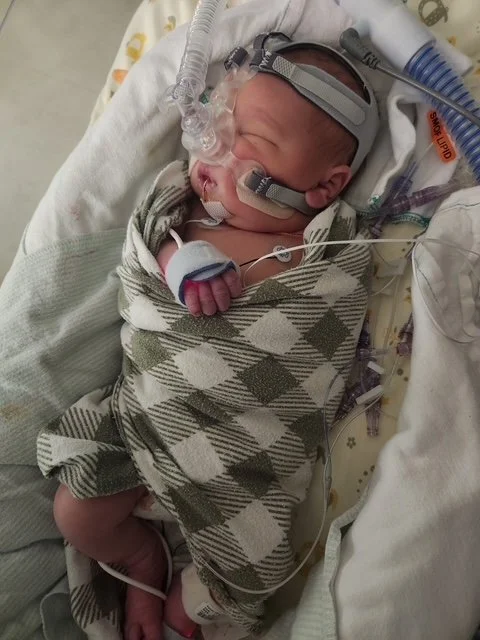
Everett in the NICU.
He spent 12 days in the NICU and 3 days on unit 4C (pediatric cardiology). When he was 8 days old he had a procedure called a balloon septostomy to help the oxygenated and deoxygenated blood mix better in his heart. We were sent home with a monitor to check his oxygen levels regularly, and told he would be followed by a cardiologist to see when the appropriate time for surgery would be. For the next 6 months, we loved the new addition to our family and tried to live as normal of a life as we could, all while monitoring his symptoms. We worked with a dietitian to help him grow, we went to frequent cardiology appointments, we worried and researched and planned. He was readmitted to the hospital twice for low oxygen saturations. At around 4 months old his growth stalled. Despite our best efforts, he wouldn’t gain weight. Around 5 months his pulmonary stenosis started to become more severe and his oxygen saturation levels started to drop. At 6 months I was calling the cardiology clinic every other day and bringing him in to have his oxygen saturations monitored. We were staying away from people and public places to try to keep him from getting a respiratory illness during cold and flu season. I was struggling mentally and trying to keep it together for my two kids. My husband was working so he could take time off when our son had surgery. When we finally got the call that it was time for him to have his open heart surgery, it felt like a weight had been lifted even though we knew hard days were ahead.
The day of his surgery, I held him while the anesthesiologist put him under, and laid my unconscious 6 month old on the operating table. How I was able to walk out of that room, I’ll never know. The surgeon performed a Nikaidoh/REV procedure which went very well. He spent two days in the PCICU and 14 days on unit 4C. His stay was extended due to a number of complications that developed and had to be managed. It was the hardest and most emotional 16 days of our lives. To see your baby in pain and not be able to do anything about it is a feeling no one can prepare you for. But no one can prepare you for seeing that first smile post surgery either.
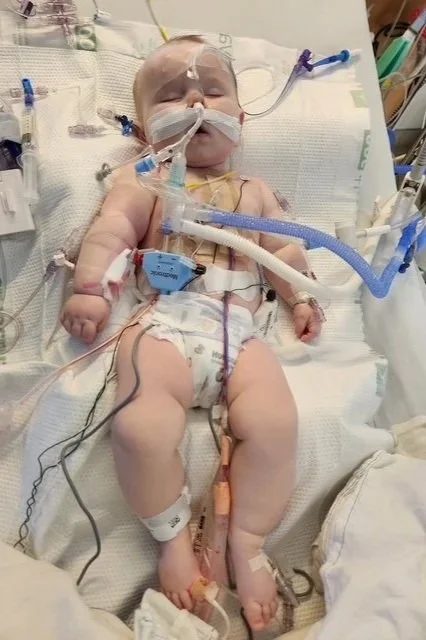
Everett, post operation.
Bringing him home was amazing. I remember changing his clothes on his crib the next day and crying happy tears. “You did it, Everett!” I said to him. All of his complications eventually resolved and today he’s the funniest, happiest, sweetest, little 16 month old boy. He’s thriving and you’d never know what he’s been through or that his heart is still not “normal”. He will need follow up surgeries in the future to give him a pulmonary valve and then replace it, but for now he’s a healthy toddler.
We are so grateful to the sonographer that wasn’t sure what she was looking at with his heart, but knew something wasn’t right. Knowing our son’s diagnosis beforehand meant he was able to get appropriate care immediately after he was born and we were able to prepare ourselves and our family for a stay in the NICU. The team at the Stollery and RAH are amazing. We are so grateful our son was cared for, and continues to be cared for, by so many incredible people.
My wish in sharing our story is that it gives other parents hope, but also helps them prepare for the reality of a congenital heart disease diagnosis. For parents who are expecting, I urge you to get timely prenatal care and ultrasounds if possible. It is so important for things like this to be diagnosed prenatally. For parents who have received a congenital heart disease diagnosis for their baby, take advantage of every support that’s offered to you. Search for Facebook groups or other support groups for people who have gone through the same thing. It can be an incredibly stressful and isolating time, but talking to other parents can help you cope, and give you hope for happy future.
Your donations will help us provide specialized training for sonographers, helping kids like Everett receive their life-saving diagnosis at the 20-week anatomy scan. An early diagnosis gives families the time to prepare for the birth of their medically fragile child.